
 https://minutescrypto.com/wp-content/uploads/2026/05/ChatGPT-Image-May-5-2026-08_09_26-PM.png
1024
1536
Minutes Crypto
https://minutescrypto.com/wp-content/uploads/2026/05/logo-1-1030x548.png
Minutes Crypto2026-05-05 18:11:132026-05-05 18:11:13💠 What Can Happen to a Token?
https://minutescrypto.com/wp-content/uploads/2026/05/ChatGPT-Image-May-5-2026-08_09_26-PM.png
1024
1536
Minutes Crypto
https://minutescrypto.com/wp-content/uploads/2026/05/logo-1-1030x548.png
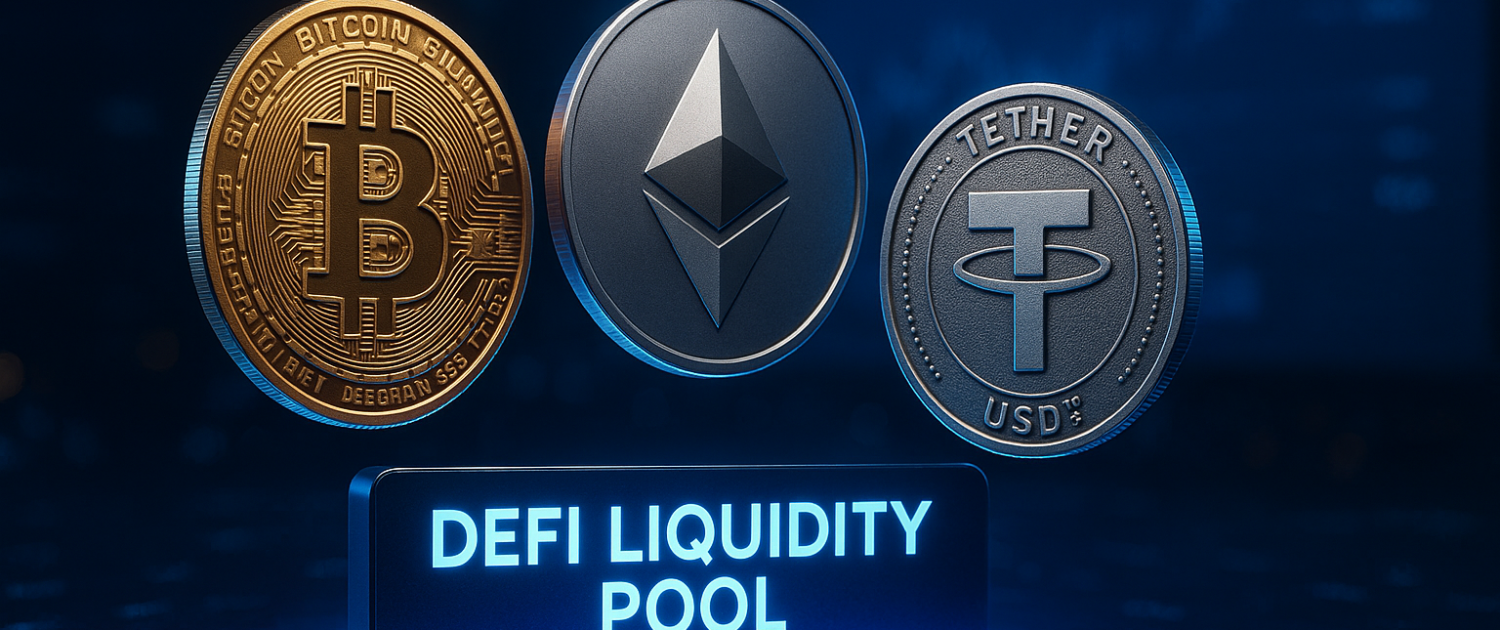
Minutes Crypto2026-05-05 18:11:132026-05-05 18:11:13💠 What Can Happen to a Token?💧 DeFi Liquidity Taxes Explained
🧠 What You Need to Know
- 💰 Adding or removing liquidity is often a taxable event under IRS rules.
- 🔁 You’re exchanging crypto for LP tokens (and vice versa), triggering capital gains or losses.
- ⚖️ Impermanent Loss (“IL”) means you may not get back the same mix of assets you put in.
- 🧾 Beginning 2026, LP-related transactions may be reported to the IRS on Form 1099-DA.
🪙 What Is a Liquidity Pool?
A liquidity pool is a collection of crypto assets locked in a smart contract to facilitate decentralized trading, lending, or yield farming — all without intermediaries.
They power major decentralized exchanges (DEXs) such as Uniswap, Curve, SushiSwap, and Balancer.
Instead of matching individual buyers and sellers, automated market makers (AMMs) set token prices by maintaining balance between the assets in the pool.
🧩 Example:
A BTC–SOL liquidity pool holds 10 BTC and 5,000 SOL.
If BTC’s price rises relative to SOL, arbitrage traders sell SOL and buy BTC until the pool’s ratio reflects the market rate.
📊 How Taxes Apply
1️⃣ Adding Liquidity (Depositing Assets)
When you deposit crypto — say, ETH and USDT — into a pool and receive LP tokens, the IRS treats this like a trade of crypto for another crypto asset.
You must recognize capital gains or losses based on the difference between the purchase price and market value at the time of deposit.
🧩 Example:
- You purchased 2 ETH for $2,800 total.
- When you deposit into a pool (along with $2,800 USDT), ETH’s value has increased to $3,400.
- You’re treated as disposing of that ETH — reporting a $600 capital gain.
- The new LP token is recorded as worth $6,200 (combined ETH + USDT value).
Even though you’re “just adding liquidity,” the IRS views it as an exchange, so it’s taxable.
2️⃣ Removing Liquidity (Withdrawing Assets)
When you redeem your LP tokens for pool assets, it’s another disposal event — you exchange LP tokens for crypto.
🧩 Example:
- LP token acquired at $6,200.
- When you withdraw, you receive $2,900 ETH + $2,700 USDT = $5,600.
- You realize a $600 capital loss.
💡 Impermanent Loss:
The mix of tokens you receive can differ due to price fluctuations — for instance, withdrawing $2,500 ETH and $3,100 USDT instead of equal values.
These shifts create IL, a key DeFi risk to monitor.
3️⃣ Rewards and Yield
Rewards (like liquidity mining tokens or yield distributions) are treated as ordinary income, not capital gains.
🧩 Example:
You receive $80 of UNI tokens as liquidity rewards.
At receipt, you report $80 as income.
If you later sell those UNI tokens, any price change is taxed as a capital gain or loss.
🧾 Form 1099-DA & IRS Reporting
Starting 2026, centralized platforms will begin reporting liquidity pool transactions on Form 1099-DA, including:
- Adding liquidity (disposing of crypto for LP tokens)
- Removing liquidity (disposing of LP tokens for underlying assets)
If your activity is on a DeFi platform that doesn’t issue IRS forms, you’re still responsible for:
- Tracking cost basis (original purchase value)
- Recording fair market value (FMV) at withdrawal
- Reporting accurate gains/losses on your return
Good records reduce audit risk and prevent overpaying tax. Minutes crypto calculator can help with proper real time record keeping.
🧮 How to Stay Compliant
✅ Track everything — dates, values, wallet addresses, pool types, and tokens.
✅ Report rewards as income and LP disposals as capital transactions.
✅ Consult a qualified tax professional for complex DeFi strategies or high-volume activity.
We welcome your feedback, questions and ideas, comment below or email us at hello@minutescrypto.com.
Interested in crypto accounting? Minutes Crypto Calculator serves as a comprehensive digital asset tax and accounting system, providing automated transaction classification, real-time portfolio tracking, and precise capital gains and losses reporting.
We are also opening two opportunities:
• The First One Hundred Impactful Users Program
Be among the first one hundred users who help shape the future of Minutes. You’ll receive early feature access, direct influence on the product roadmap, and priority support as we refine the platform for professionals and everyday investors.
• Upcoming Professional Seminars on the New Crypto Rules
We will soon be hosting seminars that break down the latest IRS and global crypto regulatory changes for accountants, tax experts, finance teams and crypto-active professionals. Everyone is welcome. If you’d like to attend, simply sign up so we know you’re interested.
Disclaimer
The information provided in this article is for general informational purposes only and does not constitute legal, accounting, or tax advice. Tax laws are complex and subject to change, and individual circumstances may vary, often resulting in different tax outcomes than those described under general rules. Readers are strongly encouraged to consult a qualified tax professional or advisor to obtain advice specific to their personal situation. The author and publisher assume no responsibility for any errors, omissions, or outcomes resulting from the use of this information.
https://minutescrypto.com/wp-content/uploads/2026/05/ChatGPT-Image-May-5-2026-08_09_26-PM.png
1024
1536
Minutes Crypto
https://minutescrypto.com/wp-content/uploads/2026/05/logo-1-1030x548.png
Minutes Crypto2026-05-05 18:11:132026-05-05 18:11:13💠 What Can Happen to a Token? https://minutescrypto.com/wp-content/uploads/2026/05/ChatGPT-Image-May-5-2026-07_14_41-PM.png
1024
1536
Minutes Crypto
https://minutescrypto.com/wp-content/uploads/2026/05/logo-1-1030x548.png
Minutes Crypto2026-04-20 09:22:132026-05-05 17:27:19The Tax Trigger
https://minutescrypto.com/wp-content/uploads/2026/05/ChatGPT-Image-May-5-2026-07_14_41-PM.png
1024
1536
Minutes Crypto
https://minutescrypto.com/wp-content/uploads/2026/05/logo-1-1030x548.png
Minutes Crypto2026-04-20 09:22:132026-05-05 17:27:19The Tax Trigger https://minutescrypto.com/wp-content/uploads/2026/05/ChatGPT-Image-May-5-2026-06_26_06-PM.png
1024
1536
Minutes Crypto
https://minutescrypto.com/wp-content/uploads/2026/05/logo-1-1030x548.png
Minutes Crypto2026-04-13 09:29:262026-05-05 16:43:09💠 Crypto Migrations
https://minutescrypto.com/wp-content/uploads/2026/05/ChatGPT-Image-May-5-2026-06_26_06-PM.png
1024
1536
Minutes Crypto
https://minutescrypto.com/wp-content/uploads/2026/05/logo-1-1030x548.png
Minutes Crypto2026-04-13 09:29:262026-05-05 16:43:09💠 Crypto Migrations https://minutescrypto.com/wp-content/uploads/2025/11/ChatGPT-Image-Nov-26-2025-04_28_30-PM.png
1024
1536
Minutes Crypto
https://minutescrypto.com/wp-content/uploads/2026/05/logo-1-1030x548.png
Minutes Crypto2025-11-26 14:30:222025-11-27 14:59:31How to Handle DeFi Taxes in 2025
https://minutescrypto.com/wp-content/uploads/2025/11/ChatGPT-Image-Nov-26-2025-04_28_30-PM.png
1024
1536
Minutes Crypto
https://minutescrypto.com/wp-content/uploads/2026/05/logo-1-1030x548.png
Minutes Crypto2025-11-26 14:30:222025-11-27 14:59:31How to Handle DeFi Taxes in 2025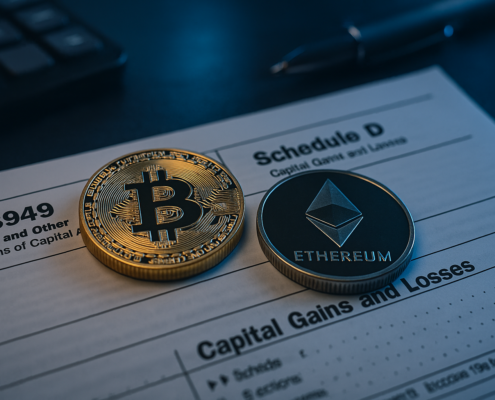 https://minutescrypto.com/wp-content/uploads/2025/11/ChatGPT-Image-Nov-24-2025-11_05_04-AM.png
1024
1536
Minutes Crypto
https://minutescrypto.com/wp-content/uploads/2026/05/logo-1-1030x548.png
Minutes Crypto2025-11-24 09:07:022025-11-26 12:14:13💰 Crypto Losses, Tax Gains: 2025 Edition
https://minutescrypto.com/wp-content/uploads/2025/11/ChatGPT-Image-Nov-24-2025-11_05_04-AM.png
1024
1536
Minutes Crypto
https://minutescrypto.com/wp-content/uploads/2026/05/logo-1-1030x548.png
Minutes Crypto2025-11-24 09:07:022025-11-26 12:14:13💰 Crypto Losses, Tax Gains: 2025 Edition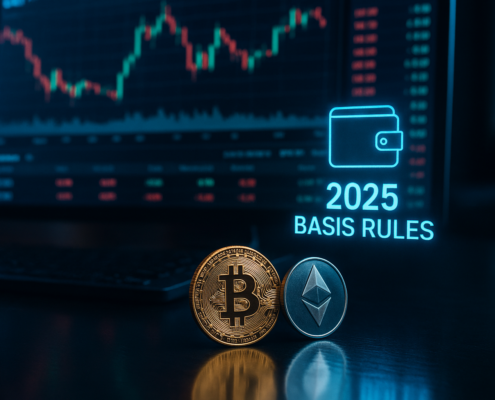 https://minutescrypto.com/wp-content/uploads/2025/11/ChatGPT-Image-Nov-21-2025-at-10_00_09-AM.png
1024
1536
Minutes Crypto
https://minutescrypto.com/wp-content/uploads/2026/05/logo-1-1030x548.png
Minutes Crypto2025-11-21 08:03:082025-11-26 12:17:03Crypto Loss Harvesting & 2025 Basis Rules — A Simple Guide
https://minutescrypto.com/wp-content/uploads/2025/11/ChatGPT-Image-Nov-21-2025-at-10_00_09-AM.png
1024
1536
Minutes Crypto
https://minutescrypto.com/wp-content/uploads/2026/05/logo-1-1030x548.png
Minutes Crypto2025-11-21 08:03:082025-11-26 12:17:03Crypto Loss Harvesting & 2025 Basis Rules — A Simple Guide https://minutescrypto.com/wp-content/uploads/2025/11/ChatGPT-Image-Nov-20-2025-at-04_48_22-PM.png
1024
1536
Minutes Crypto
https://minutescrypto.com/wp-content/uploads/2026/05/logo-1-1030x548.png
Minutes Crypto2025-11-20 14:51:372025-11-26 12:17:56DeFi Liquidity Taxes Explained
https://minutescrypto.com/wp-content/uploads/2025/11/ChatGPT-Image-Nov-20-2025-at-04_48_22-PM.png
1024
1536
Minutes Crypto
https://minutescrypto.com/wp-content/uploads/2026/05/logo-1-1030x548.png
Minutes Crypto2025-11-20 14:51:372025-11-26 12:17:56DeFi Liquidity Taxes Explained https://minutescrypto.com/wp-content/uploads/2025/11/ChatGPT-Image-Nov-17-2025-05_15_22-PM.png
1024
1536
Minutes Crypto
https://minutescrypto.com/wp-content/uploads/2026/05/logo-1-1030x548.png
Minutes Crypto2025-11-17 15:17:512025-11-26 12:18:22Navigating Bitcoin Taxes in 2025: Federal, NIIT, and State Rules Simplified
https://minutescrypto.com/wp-content/uploads/2025/11/ChatGPT-Image-Nov-17-2025-05_15_22-PM.png
1024
1536
Minutes Crypto
https://minutescrypto.com/wp-content/uploads/2026/05/logo-1-1030x548.png
Minutes Crypto2025-11-17 15:17:512025-11-26 12:18:22Navigating Bitcoin Taxes in 2025: Federal, NIIT, and State Rules Simplified https://minutescrypto.com/wp-content/uploads/2025/11/ChatGPT-Image-Nov-14-2025-09_45_10-AM.png
1024
1536
Minutes Crypto
https://minutescrypto.com/wp-content/uploads/2026/05/logo-1-1030x548.png
Minutes Crypto2025-11-14 07:53:342025-11-26 12:27:54How to Report Crypto Trading Like a Business
https://minutescrypto.com/wp-content/uploads/2025/11/ChatGPT-Image-Nov-14-2025-09_45_10-AM.png
1024
1536
Minutes Crypto
https://minutescrypto.com/wp-content/uploads/2026/05/logo-1-1030x548.png
Minutes Crypto2025-11-14 07:53:342025-11-26 12:27:54How to Report Crypto Trading Like a Business


Leave a Reply
Want to join the discussion?Feel free to contribute!