 https://minutescrypto.com/wp-content/uploads/2025/11/ChatGPT-Image-Nov-26-2025-04_28_30-PM.png
1024
1536
Minutes Crypto
https://minutescrypto.com/wp-content/uploads/2025/11/Crypto-calculator-logo-1030x534.png
Minutes Crypto2025-11-26 14:30:222025-11-27 14:59:31How to Handle DeFi Taxes in 2025
https://minutescrypto.com/wp-content/uploads/2025/11/ChatGPT-Image-Nov-26-2025-04_28_30-PM.png
1024
1536
Minutes Crypto
https://minutescrypto.com/wp-content/uploads/2025/11/Crypto-calculator-logo-1030x534.png
Minutes Crypto2025-11-26 14:30:222025-11-27 14:59:31How to Handle DeFi Taxes in 2025Navigating Bitcoin Taxes in 2025: Federal, NIIT, and State Rules Simplified
A quick, clear overview of how Bitcoin is taxed in the U.S. — designed for entrepreneurs, investors, and professionals who want to stay compliant while minimizing tax stress.
🔍 1. Big Picture: How the IRS Sees Bitcoin
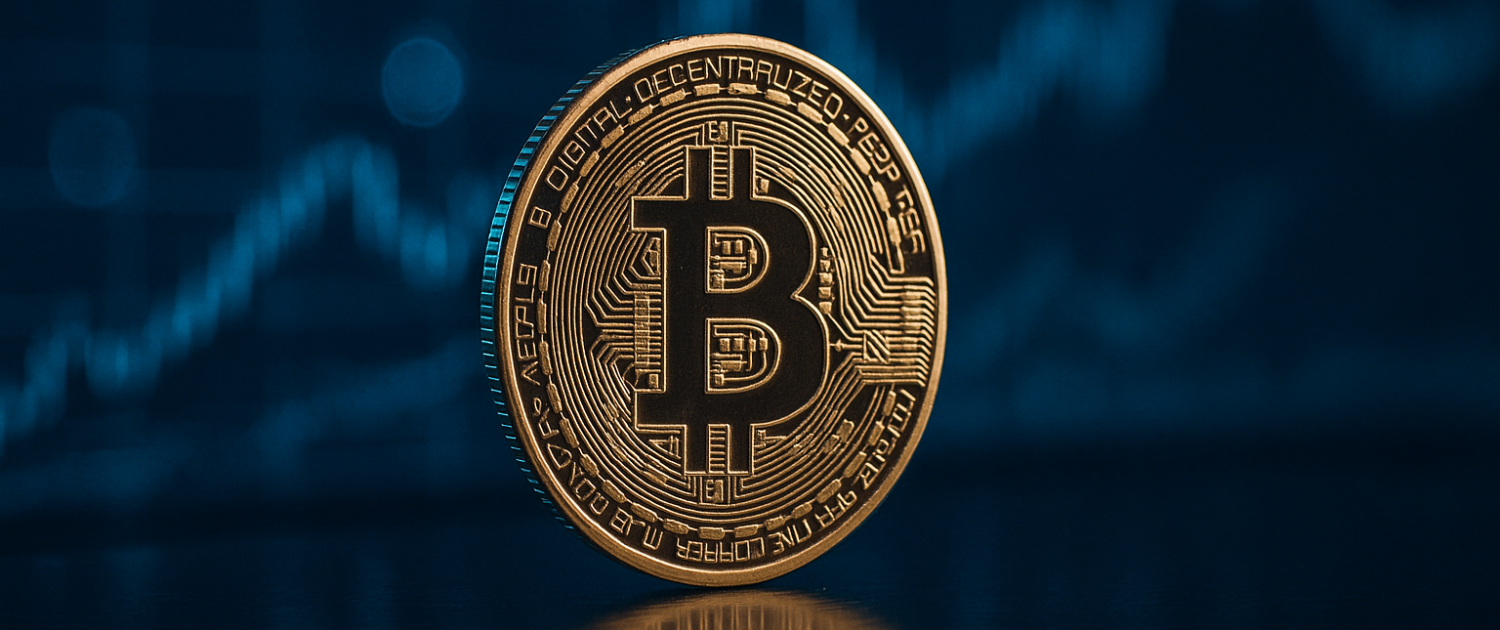
The Internal Revenue Service (IRS) treats Bitcoin as property, not currency.
That means every time you sell, trade, or spend it — it’s a taxable event.
🧾 What That Means:
- Selling or swapping Bitcoin = Capital gain or loss
- Receiving Bitcoin = Ordinary income
- Buying and holding Bitcoin = Not taxable (until you sell)
👉 IRS Official Guidance: IRS Notice 2014-21 (Virtual Currency Guidance)
⚙️ 2. When Bitcoin Triggers a Tax
| 💡 Activity | 📘 Tax Type | 📄 Explanation |
| Sell Bitcoin for USD | Capital Gains | You pay tax on the difference between your cost basis and sale price. |
| Exchange Bitcoin for another crypto | Capital Gains | Treated as selling one asset and buying another. |
| Spend Bitcoin on goods or services | Capital Gains | Using Bitcoin to pay is treated as disposing of property. |
| Get paid in Bitcoin for work (employee) | Wages | Report the USD fair market value on Form W-2; payroll taxes apply. |
| Get paid in Bitcoin (freelance or business) | Business Income | Report on Schedule C (Form 1040) as ordinary income. |
| Mine, stake, or receive airdrops | Income | Market value at the time you gain control counts as taxable income. |
🟢 Not taxable:
Buying Bitcoin with cash or transferring between your own wallets.
💼 3. Two Ways Bitcoin Is Taxed
3.1 📈 Capital Gains Tax
You owe this when you sell or exchange Bitcoin for more than you paid.
| Holding Period | Type | Federal Rate* |
| 1 year or less | Short-Term | 10–37% (your ordinary income bracket) |
| More than 1 year | Long-Term | 0%, 15%, or 20% |
💡 Plus up to 3.8% Net Investment Income Tax (NIIT) may apply if your modified adjusted gross income (MAGI) exceeds:
- $200,000 (Single or Head of Household)
- $250,000 (Married Filing Jointly)
- $125,000 (Married Filing Separately)
The NIIT applies to net investment income, which includes capital gains from Bitcoin and other digital assets.
Therefore, your effective federal long-term rate could reach 23.8% (20% + 3.8%) for higher-income taxpayers.
📍 State Taxes:
Most U.S. states also tax crypto gains as capital gains or ordinary income.
- States like California, New York, and New Jersey apply income-based rates that can exceed 10%.
- Others, such as Texas, Florida, and Wyoming, have no state income tax, meaning no additional crypto tax at the state level.
- Check your state Department of Revenue or consult a local CPA — rules vary.
💡 Holding Bitcoin for over a year often still cuts your federal rate nearly in half — even after NIIT.
📎 IRS Forms: Schedule D (Capital Gains and Losses) + Form 8960 (Net Investment Income Tax)
3.2 💵 Income Tax
If you earn Bitcoin (from freelancing, mining, staking, or airdrops), it’s ordinary income — just like salary.
Record its USD value on the day received.
| Source | Where to Report | IRS Form |
| Mining, staking, airdrops | Other Income | Schedule 1 (Form 1040) |
| Freelance or business work | Business Income | Schedule C (Form 1040) |
| Wages in Bitcoin | Employment Income | Form W-2 |
📊 4. Reporting Bitcoin to the IRS
1️⃣ Keep Records — Track every transaction: date, amount, USD value, and purpose.
2️⃣ List Sales & Trades on Form 8949 — Show cost basis, sale price, and gain/loss → Totals go to Schedule D.
3️⃣ Report Income — Include any earned Bitcoin value in USD on your tax return.
4️⃣ Answer “Yes” to the IRS Digital Asset question on Form 1040 — the IRS cross-checks with exchange data.
📎 Forms:
📉 5. Reporting Bitcoin Losses
If your Bitcoin’s value drops and you sell at a loss, you can offset gains or deduct up to $3,000 from ordinary income.
Example:
Gain $7,000 + Loss $10,000 → Net Loss = $3,000 deductible this year.
✅ Losses beyond $3,000 carry forward to future years.
💡 Because Bitcoin isn’t a “security,” the wash-sale rule does not apply (as of 2025) — meaning you can sell at a loss and rebuy immediately.
(Several 2025 proposals would change this, but none enacted.)
⚖️ 6. Special Situations
🪙 Hard Forks & Airdrops
Taxable income when you gain control of new coins. Report their USD value at that time.
Source: IRS FAQ on Virtual Currency – Q21–24
🌐 Bitcoin in Business
If your business accepts Bitcoin:
- Report income in USD value at the time of each transaction.
- You may owe sales tax (state-specific).
- Keep detailed records of receipts and conversions.
🧱 DeFi & Layer-2 (Lightning Network)
- Interest, staking rewards, or routing fees = ordinary income.
- Loan collateral liquidations = capital gains event.
Related IRS Guidance: Revenue Ruling 2023-14 (Staking Income)
🆕 7. 2025 Updates: Broker Reporting (Form 1099-DA)
- Starting January 1, 2025, brokers must issue Form 1099-DA (Digital Asset Proceeds Reporting) for sales of digital assets.
- Gross proceeds reporting begins in 2025; cost-basis reporting phases in from 2026 for covered assets.
- In April 2025, Congress repealed the DeFi front-end broker rule, but centralized exchanges remain subject to 1099-DA.
- The IRS has provided transition relief for penalties and backup withholding.
⚠️ Even if you don’t receive a 1099-DA, you must still report all taxable crypto income and gains.
💡 8. Smart Tax Planning Tips
- ✅ Hold > 1 year to qualify for lower long-term rates.
- ✅ Offset gains with losses using crypto tax-loss harvesting.
- ✅ Donate appreciated Bitcoin (held > 1 year) to qualified charities — deductible at FMV and avoids capital gains. For donations over $5,000, a qualified appraisal and Form 8283 are required.
- ✅ Use self-directed IRAs to defer or eliminate crypto taxes.
🧭 9. Staying Compliant
The IRS actively monitors wallets and exchanges.
To avoid penalties:
- Maintain accurate transaction records.
- Report every taxable event.
- Work with a qualified tax advisor if you trade or mine regularly.
⚠️ Non-reporting risk: Exchanges share user data with the IRS via Form 1099-DA (2025). Unreported crypto income can trigger audits, penalties, and interest.
🧾 Summary Checklist
| ✔️ Task | 💬 Description |
| Record every trade & transfer | Include date, cost basis, and USD value |
| Report income in USD | Mining, staking, payments for work |
| File Form 8949 & Schedule D | For all sales and swaps |
| Claim losses | Up to $3,000 per year (after offsetting gains) |
| Answer IRS digital-asset question | On every Form 1040 |
We welcome your feedback, questions and ideas, comment below or email us at hello@minutescrypto.com.
Interested in crypto accounting? Minutes Crypto Calculator serves as a comprehensive digital asset tax and accounting system, providing automated transaction classification, real-time portfolio tracking, and precise capital gains and losses reporting.
We are also opening two opportunities:
• The First One Hundred Impactful Users Program
Be among the first one hundred users who help shape the future of Minutes. You’ll receive early feature access, direct influence on the product roadmap, and priority support as we refine the platform for professionals and everyday investors.
• Upcoming Professional Seminars on the New Crypto Rules
We will soon be hosting seminars that break down the latest IRS and global crypto regulatory changes for accountants, tax experts, finance teams and crypto-active professionals. Everyone is welcome. If you’d like to attend, simply sign up so we know you’re interested.
📚 Sources & References
-
- IRS Notice 2014-21 – Virtual Currency Guidance
- IRS Revenue Ruling 2023-14 – Staking Income
- IRS FAQ on Virtual Currency Transactions
- Schedule D (Form 1040)
- Form 8949 – Sales and Other Dispositions of Capital Assets
- Form 8960 – Net Investment Income Tax
- Form 1099-DA – Digital Asset Proceeds Reporting (2025)
- Publication 550 – Investment Income & Expenses
- Form 8283 – Noncash Charitable Contributions
Disclaimer
The information provided in this article is for general informational purposes only and does not constitute legal, accounting, or tax advice. Tax laws are complex and subject to change, and individual circumstances may vary, often resulting in different tax outcomes than those described under general rules. Readers are strongly encouraged to consult a qualified tax professional or advisor to obtain advice specific to their personal situation. The author and publisher assume no responsibility for any errors, omissions, or outcomes resulting from the use of this information.
https://minutescrypto.com/wp-content/uploads/2025/11/ChatGPT-Image-Nov-26-2025-04_28_30-PM.png
1024
1536
Minutes Crypto
https://minutescrypto.com/wp-content/uploads/2025/11/Crypto-calculator-logo-1030x534.png
Minutes Crypto2025-11-26 14:30:222025-11-27 14:59:31How to Handle DeFi Taxes in 2025 https://minutescrypto.com/wp-content/uploads/2025/11/ChatGPT-Image-Nov-24-2025-11_05_04-AM.png
1024
1536
Minutes Crypto
https://minutescrypto.com/wp-content/uploads/2025/11/Crypto-calculator-logo-1030x534.png
Minutes Crypto2025-11-24 09:07:022025-11-26 12:14:13💰 Crypto Losses, Tax Gains: 2025 Edition
https://minutescrypto.com/wp-content/uploads/2025/11/ChatGPT-Image-Nov-24-2025-11_05_04-AM.png
1024
1536
Minutes Crypto
https://minutescrypto.com/wp-content/uploads/2025/11/Crypto-calculator-logo-1030x534.png
Minutes Crypto2025-11-24 09:07:022025-11-26 12:14:13💰 Crypto Losses, Tax Gains: 2025 Edition https://minutescrypto.com/wp-content/uploads/2025/11/ChatGPT-Image-Nov-21-2025-at-10_00_09-AM.png
1024
1536
Minutes Crypto
https://minutescrypto.com/wp-content/uploads/2025/11/Crypto-calculator-logo-1030x534.png
Minutes Crypto2025-11-21 08:03:082025-11-26 12:17:03Crypto Loss Harvesting & 2025 Basis Rules — A Simple Guide
https://minutescrypto.com/wp-content/uploads/2025/11/ChatGPT-Image-Nov-21-2025-at-10_00_09-AM.png
1024
1536
Minutes Crypto
https://minutescrypto.com/wp-content/uploads/2025/11/Crypto-calculator-logo-1030x534.png
Minutes Crypto2025-11-21 08:03:082025-11-26 12:17:03Crypto Loss Harvesting & 2025 Basis Rules — A Simple Guide https://minutescrypto.com/wp-content/uploads/2025/11/ChatGPT-Image-Nov-20-2025-at-04_48_22-PM.png
1024
1536
Minutes Crypto
https://minutescrypto.com/wp-content/uploads/2025/11/Crypto-calculator-logo-1030x534.png
Minutes Crypto2025-11-20 14:51:372025-11-26 12:17:56DeFi Liquidity Taxes Explained
https://minutescrypto.com/wp-content/uploads/2025/11/ChatGPT-Image-Nov-20-2025-at-04_48_22-PM.png
1024
1536
Minutes Crypto
https://minutescrypto.com/wp-content/uploads/2025/11/Crypto-calculator-logo-1030x534.png
Minutes Crypto2025-11-20 14:51:372025-11-26 12:17:56DeFi Liquidity Taxes Explained https://minutescrypto.com/wp-content/uploads/2025/11/ChatGPT-Image-Nov-17-2025-05_15_22-PM.png
1024
1536
Minutes Crypto
https://minutescrypto.com/wp-content/uploads/2025/11/Crypto-calculator-logo-1030x534.png
Minutes Crypto2025-11-17 15:17:512025-11-26 12:18:22Navigating Bitcoin Taxes in 2025: Federal, NIIT, and State Rules Simplified
https://minutescrypto.com/wp-content/uploads/2025/11/ChatGPT-Image-Nov-17-2025-05_15_22-PM.png
1024
1536
Minutes Crypto
https://minutescrypto.com/wp-content/uploads/2025/11/Crypto-calculator-logo-1030x534.png
Minutes Crypto2025-11-17 15:17:512025-11-26 12:18:22Navigating Bitcoin Taxes in 2025: Federal, NIIT, and State Rules Simplified https://minutescrypto.com/wp-content/uploads/2025/11/ChatGPT-Image-Nov-14-2025-09_45_10-AM.png
1024
1536
Minutes Crypto
https://minutescrypto.com/wp-content/uploads/2025/11/Crypto-calculator-logo-1030x534.png
Minutes Crypto2025-11-14 07:53:342025-11-26 12:27:54How to Report Crypto Trading Like a Business
https://minutescrypto.com/wp-content/uploads/2025/11/ChatGPT-Image-Nov-14-2025-09_45_10-AM.png
1024
1536
Minutes Crypto
https://minutescrypto.com/wp-content/uploads/2025/11/Crypto-calculator-logo-1030x534.png
Minutes Crypto2025-11-14 07:53:342025-11-26 12:27:54How to Report Crypto Trading Like a Business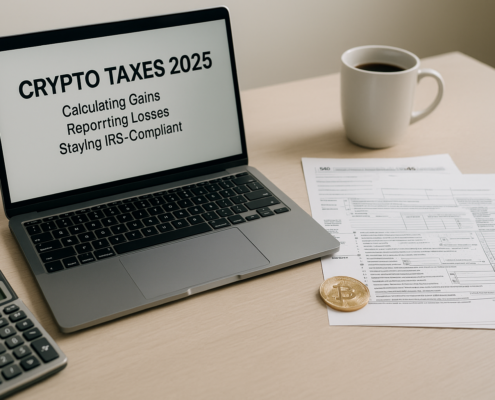 https://minutescrypto.com/wp-content/uploads/2025/11/ChatGPT-Image-Nov-10-2025-10_48_48-AM.png
1024
1536
Minutes Crypto
https://minutescrypto.com/wp-content/uploads/2025/11/Crypto-calculator-logo-1030x534.png
Minutes Crypto2025-11-11 08:24:342025-11-26 12:28:10Your 2025 Crypto Tax Guide
https://minutescrypto.com/wp-content/uploads/2025/11/ChatGPT-Image-Nov-10-2025-10_48_48-AM.png
1024
1536
Minutes Crypto
https://minutescrypto.com/wp-content/uploads/2025/11/Crypto-calculator-logo-1030x534.png
Minutes Crypto2025-11-11 08:24:342025-11-26 12:28:10Your 2025 Crypto Tax Guide https://minutescrypto.com/wp-content/uploads/2025/11/ChatGPT-Image-Nov-5-2025-12_25_58-PM.png
1024
1536
Minutes Crypto
https://minutescrypto.com/wp-content/uploads/2025/11/Crypto-calculator-logo-1030x534.png
Minutes Crypto2025-11-05 10:23:142025-11-26 12:28:21Form 1099-DA Explained
https://minutescrypto.com/wp-content/uploads/2025/11/ChatGPT-Image-Nov-5-2025-12_25_58-PM.png
1024
1536
Minutes Crypto
https://minutescrypto.com/wp-content/uploads/2025/11/Crypto-calculator-logo-1030x534.png
Minutes Crypto2025-11-05 10:23:142025-11-26 12:28:21Form 1099-DA Explained https://minutescrypto.com/wp-content/uploads/2025/11/ChatGPT-Image-Nov-4-2025-01_17_33-PM.png
1024
1536
Minutes Crypto
https://minutescrypto.com/wp-content/uploads/2025/11/Crypto-calculator-logo-1030x534.png
Minutes Crypto2025-11-04 11:26:402025-11-26 12:28:36Swapping Crypto = Taxable Event
https://minutescrypto.com/wp-content/uploads/2025/11/ChatGPT-Image-Nov-4-2025-01_17_33-PM.png
1024
1536
Minutes Crypto
https://minutescrypto.com/wp-content/uploads/2025/11/Crypto-calculator-logo-1030x534.png
Minutes Crypto2025-11-04 11:26:402025-11-26 12:28:36Swapping Crypto = Taxable Event


Leave a Reply
Want to join the discussion?Feel free to contribute!