

 https://minutescrypto.com/wp-content/uploads/2026/05/ChatGPT-Image-May-5-2026-08_09_26-PM.png
1024
1536
Minutes Crypto
https://minutescrypto.com/wp-content/uploads/2026/05/logo-1-1030x548.png
Minutes Crypto2026-05-05 18:11:132026-05-05 18:11:13💠 What Can Happen to a Token?
https://minutescrypto.com/wp-content/uploads/2026/05/ChatGPT-Image-May-5-2026-08_09_26-PM.png
1024
1536
Minutes Crypto
https://minutescrypto.com/wp-content/uploads/2026/05/logo-1-1030x548.png
Minutes Crypto2026-05-05 18:11:132026-05-05 18:11:13💠 What Can Happen to a Token?💠 What Can Happen to a Token?
A Practical U.S. Federal Income Tax Map for Upgrades, Wrappers, Bridges, DeFi, Forks, and Related Token Events
Assumption: U.S. federal income tax, and unless noted otherwise, the holder treats the token as a capital asset
For U.S. tax purposes, digital assets are treated as property, not currency. The clearest current IRS rules are these: simply holding a token, buying it with dollars, or moving it between wallets/accounts you own is generally not taxable; exchanging it for a different token, dollars, goods, or services is generally a disposition; and certain receipts of new tokens, such as hard-fork airdrops or staking rewards, can create ordinary income. At the same time, the IRS has given only temporary broker-reporting exceptions for several DeFi categories, including wrapping/unwrapping, liquidity-provider transactions, staking transactions, digital-asset lending, short sales, and notional principal contracts, which means the reporting rules are not the same thing as definitive substantive tax rules.
🧭 The Core Question
The best organizing question is not “what did the protocol call it,” but what actually happened to the property. Treasury Regulation § 1.1001-1 says gain or loss is recognized when property is converted into cash or exchanged for property that differs materially in kind or extent. That is why the tax analysis usually turns on whether you still hold the same token, merely moved it, upgraded it in place, or instead surrendered it for a different asset, claim, or right.
1. 🪙 You simply hold the token
This is the baseline non-event. The IRS says a taxpayer who only owned or held digital assets during the year, without engaging in digital asset transactions, generally checks “No” to the digital asset question. That is the cleanest sign that mere continued ownership, by itself, is not the realization event.
2. 💵 You buy the token with U.S. dollars or other real currency
Buying digital assets with dollars is generally another clean starting point. The IRS says purchasing digital assets with real currency, without selling or otherwise disposing of them, is not itself the type of digital asset transaction that requires a “Yes” answer to the digital asset question. The tax consequence usually comes later, when the token is sold, exchanged, or otherwise disposed of.
3. 🔁 You transfer the same token between wallets, addresses, or accounts you own
This is one of the clearest express IRS rules. The IRS says that if you transfer digital assets from one wallet, address, or account belonging to you to another wallet, address, or account that also belongs to you, the transfer is a non-taxable event, except to the extent digital assets are used or withheld to pay transaction services. That makes same-owner self-transfers the strongest nonrecognition category.
4. ⛽ You use a token to pay gas, protocol fees, or other services
This is easy to miss, but it matters. The IRS says that if you pay for services using digital assets, you have disposed of the digital assets and recognize capital gain or loss on that disposition. So even where the main event is otherwise non-taxable, such as a self-transfer, the separate use of a token to pay gas or other transaction services can itself be a taxable disposition of the fee token.
5. 🛠️ The protocol upgrades the token in place
This is usually the cleanest upgrade case. If the contract is upgraded in place, the user continues to hold the same token at the same address or under the same continuing position, and no new token is distributed, the best reading is usually that there has been no exchange of property for materially different property. That conclusion is an inference from § 1.1001-1’s general rule, not a crypto-specific IRS ruling on proxy upgrades, so it is strongest when the upgrade really is only a software or implementation change rather than a surrender-and-receipt event.
6. 🎁 The holder receives a reward, award, or payment in tokens
If a token is received as compensation, reward, award, or payment for services or goods, that is generally an income event, not merely a capital-asset exchange. The IRS says digital assets received as payment for services produce ordinary income measured by fair market value when received, and its digital-assets guidance also instructs taxpayers to answer “Yes” if they received tokens as a reward, award, or payment for property or services.
7. 🧵 Wrapping and unwrapping
Wrapping and unwrapping deserve their own category because the IRS has acknowledged them specifically, but not yet resolved them substantively. Notice 2024-57, as summarized by the IRS, says brokers are temporarily not required to file Forms 1099-DA or furnish payee statements for wrapping and unwrapping transactions until further guidance is issued. That is a reporting exception, not a blanket substantive nonrecognition rule. So the tax analysis still turns on § 1.1001-1: did the holder keep the same property in a different technical format, or exchange it for property differing materially in kind or extent?
8. 🔄 Token migration, burn-and-mint, old-token-for-new-token swap, or v1-to-v2 exchange
This is the category most likely to be taxable. The IRS says that if you exchange digital assets for other digital assets differing materially in kind or extent, you recognize capital gain or loss. It also says the basis in the newly received digital assets is generally the fair market value used in determining the amount realized, and the holding period in the acquired assets begins the day after receipt. So a burn-and-mint migration or old-token-for-new-token exchange is often the strongest case for exchange treatment unless there is a compelling argument that nothing materially changed.
9. 🌉 Bridging or chain migration
Bridging is more nuanced because it can fall into two different tax patterns. If the bridge is, in substance, just a same-owner movement of the same token under your own control, it fits the IRS’s self-transfer rule and points toward nonrecognition. But if the bridge leaves you holding a wrapped, synthetic, bridged, or replacement token on another chain, then the question becomes whether you now hold property materially different in kind or extent. The IRS has not issued a single bright-line bridge rule that resolves every L1-to-L2 or cross-chain architecture, so this remains a facts-and-rights analysis.
10. 🏦 You post the token as collateral for a loan
A pure pledge of collateral is usually the best loan-origination case for nonrecognition. If the token is merely pledged and not sold or exchanged, there ordinarily has not yet been a § 1.1001-1 disposition. But that conclusion is still an inference from the general sale-or-exchange framework, not a dedicated IRS safe harbor for every crypto-collateral arrangement. It is strongest when the lender merely holds the collateral and weakest when the platform can lend it onward, substitute it, rehypothecate it, or otherwise transform the holder’s rights.
11. 🪤 The lender, protocol, or DeFi platform uses, lends, or rehypothecates the token
This is where collateral, lending, and DeFi start to blur together. The IRS has specifically identified transactions described by market participants as the lending of digital assets as a category receiving temporary broker-reporting relief, but that is not the same as a substantive rule saying such transactions are tax-free. Where the token can be sold, lent onward, substituted, wrapped, or converted into another asset or claim, the analysis goes back to whether the holder has actually exchanged the original property for something materially different.
12. 💥 The token is liquidated, redeemed, bought back, or sold for cash or stablecoins
This is generally the clearest taxable disposition pattern. Under § 1.1001-1, gain or loss is recognized on a conversion into cash or on a sale or other disposition. The IRS’s digital-assets guidance likewise treats sales, exchanges, and other dispositions of digital assets held as capital assets as events reported on Form 8949, with gain or loss measured by comparing amount realized and basis. That covers obvious sales, issuer redemptions for cash, collateral liquidations, and most buyback-style exits.
13. ⛓️ Staking
Staking has a clearer income rule than many other DeFi activities. In Rev. Rul. 2023-14, the IRS held that if a cash-method taxpayer stakes cryptocurrency native to a proof-of-stake blockchain and receives additional units as validation rewards, the fair market value of those rewards is included in gross income in the year the taxpayer gains dominion and control over them. The same ruling says that is also true if the taxpayer stakes through a cryptocurrency exchange.
14. 🌊 Liquid staking and restaking
Liquid staking adds another layer because the holder may both receive staking rewards and receive a separate token representing the staked position. The reward piece is addressed by Rev. Rul. 2023-14 if what is received is native validation reward income. But the separate issuance of a liquid-staking or restaking receipt token is a different question. The IRS has given only temporary broker-reporting relief for staking transactions, and it has not yet issued a comprehensive substantive rule for every liquid-staking or restaking design. So the extra receipt token generally still has to be analyzed under the same “same property versus materially different property” framework of § 1.1001-1.
15. 🤝 Liquidity-provider deposits, AMM positions, and LP tokens
This is another major DeFi category the IRS has expressly identified but not fully resolved substantively. The IRS says liquidity-provider transactions currently fall within Notice 2024-57’s temporary broker-reporting exception. That tells us the government recognizes LP transactions as their own category, but it does not tell us that every LP deposit or withdrawal is automatically non-taxable or taxable. The substantive question still turns on what the taxpayer gave up and what the taxpayer received: the same property, a new token, a pool claim, or something materially different in kind or extent.
16. 📉 Short sales, synthetics, and notional-principal-style DeFi positions
The IRS has also separately identified transactions described by market participants as short sales of digital assets and notional principal contracts as categories receiving temporary broker-reporting exceptions. Again, that is not a complete substantive tax rule. It does, however, signal that these synthetic and derivative-style positions are not being collapsed into a single simple “token transfer” rule. These arrangements usually require separate analysis of the actual legal claim the user holds, when any disposition occurs, and whether the user is still holding the same token or instead holds a contract right or synthetic exposure.
17. 🌱 Earn programs and similar yield products
The IRS separately reminds taxpayers that income earned from digital asset transactions must be reported, and it expressly references rewards income from staking or earn programs. That means yield products should not be analyzed only as asset movements; they may also produce income even where the platform labels the return as “yield,” “earn,” or “rewards.” The harder question in many programs is whether the user has only income from the yield component, or also a separate exchange/disposition event from transferring the underlying token into the program.
18. 🪓 Hard fork without new units
This is one of the clearer IRS rules. Rev. Rul. 2019-24 says a taxpayer does not have gross income from a hard fork if the taxpayer does not receive units of a new cryptocurrency. So a chain-level protocol split, standing alone, is not itself enough if no new units are actually or constructively received.
19. 🎈 Hard fork followed by an airdrop, or other new-chain distribution
If new units are actually received, the result changes. Rev. Rul. 2019-24 says that when a hard fork is followed by an airdrop of new cryptocurrency and the taxpayer has dominion and control over those new units, the taxpayer has ordinary income equal to the fair market value of the new units when received. The IRS FAQ says the same thing in summary form.
20. 🔥 Burn, redenomination, split, merge, or other supply change
These events do not yet have one clean crypto-specific IRS rule. The framework is still § 1.1001-1: if the event is just an in-place mathematical or technical adjustment and the holder continues with the same property, the nonrecognition argument is stronger; if the event requires surrendering one token and receiving another token or a different claim, exchange treatment becomes more likely. In practice, these cases usually need to be sorted by the mechanics: same token, same address, same rights versus old asset surrendered and new asset received.
21. 🧾 The reporting overlay
Broker reporting is important, but it does not answer the substantive tax question by itself. The IRS says Form 1099-DA reporting now applies to certain custodial brokers for transactions on or after January 1, 2025, with basis reporting for certain transactions on or after January 1, 2026. The same IRS materials also say the final regulations do not yet include decentralized or non-custodial brokers that do not take possession of the assets being sold or exchanged. So reporting status can help identify categories, but it does not itself decide whether a wrapper, bridge, LP deposit, or DeFi restructuring is taxable.
💡 Practical tracking note: Because one wallet can contain many different tax categories — self-transfers, swaps, gas fees, staking rewards, LP deposits, bridges, and airdrops — accurate classification is just as important as price tracking. Tools like Minutes, www.minutescrypto.com, can help by categorizing transaction types and preserving a wallet-level audit trail, so users can separate non-taxable movements from taxable dispositions and income events.
📌 Practical Bottom Line
The most useful way to think about token events is this:
Usually strongest for nonrecognition: holding, buying with fiat, same-owner self-transfers, and true in-place upgrades where no new token is received.
Usually strongest for taxable exchange or disposition: selling for cash, swapping one token for another materially different token, burn-and-mint migrations, collateral liquidations, and using tokens to pay fees, goods, or services.
Usually strongest for ordinary income: hard-fork airdrops when new units are received with dominion and control, staking validation rewards, and tokens received as compensation, rewards, awards, or payment for services.
Still gray and facts-dependent: wrappers/unwrappers, bridges that create replacement tokens, liquid staking receipt tokens, LP deposits and withdrawals, digital-asset lending or rehypothecation, DeFi short/synthetic positions, and other token restructurings where the platform mechanics may change the holder’s legal and economic rights. For those, the key question remains whether the holder still has the same property or instead has exchanged it for property differing materially in kind or extent.
Disclaimer
The information provided in this article is for general informational purposes only and does not constitute legal, accounting, or tax advice. Tax laws are complex and subject to change, and individual circumstances may vary, often resulting in different tax outcomes than those described under general rules. Readers are strongly encouraged to consult a qualified tax professional or advisor to obtain advice specific to their personal situation. The author and publisher assume no responsibility for any errors, omissions, or outcomes resulting from the use of this information.
https://minutescrypto.com/wp-content/uploads/2026/05/ChatGPT-Image-May-5-2026-08_09_26-PM.png
1024
1536
Minutes Crypto
https://minutescrypto.com/wp-content/uploads/2026/05/logo-1-1030x548.png
Minutes Crypto2026-05-05 18:11:132026-05-05 18:11:13💠 What Can Happen to a Token? https://minutescrypto.com/wp-content/uploads/2026/05/ChatGPT-Image-May-5-2026-07_14_41-PM.png
1024
1536
Minutes Crypto
https://minutescrypto.com/wp-content/uploads/2026/05/logo-1-1030x548.png
Minutes Crypto2026-04-20 09:22:132026-05-05 17:27:19The Tax Trigger
https://minutescrypto.com/wp-content/uploads/2026/05/ChatGPT-Image-May-5-2026-07_14_41-PM.png
1024
1536
Minutes Crypto
https://minutescrypto.com/wp-content/uploads/2026/05/logo-1-1030x548.png
Minutes Crypto2026-04-20 09:22:132026-05-05 17:27:19The Tax Trigger https://minutescrypto.com/wp-content/uploads/2026/05/ChatGPT-Image-May-5-2026-06_26_06-PM.png
1024
1536
Minutes Crypto
https://minutescrypto.com/wp-content/uploads/2026/05/logo-1-1030x548.png
Minutes Crypto2026-04-13 09:29:262026-05-05 16:43:09💠 Crypto Migrations
https://minutescrypto.com/wp-content/uploads/2026/05/ChatGPT-Image-May-5-2026-06_26_06-PM.png
1024
1536
Minutes Crypto
https://minutescrypto.com/wp-content/uploads/2026/05/logo-1-1030x548.png
Minutes Crypto2026-04-13 09:29:262026-05-05 16:43:09💠 Crypto Migrations https://minutescrypto.com/wp-content/uploads/2025/11/ChatGPT-Image-Nov-26-2025-04_28_30-PM.png
1024
1536
Minutes Crypto
https://minutescrypto.com/wp-content/uploads/2026/05/logo-1-1030x548.png
Minutes Crypto2025-11-26 14:30:222025-11-27 14:59:31How to Handle DeFi Taxes in 2025
https://minutescrypto.com/wp-content/uploads/2025/11/ChatGPT-Image-Nov-26-2025-04_28_30-PM.png
1024
1536
Minutes Crypto
https://minutescrypto.com/wp-content/uploads/2026/05/logo-1-1030x548.png
Minutes Crypto2025-11-26 14:30:222025-11-27 14:59:31How to Handle DeFi Taxes in 2025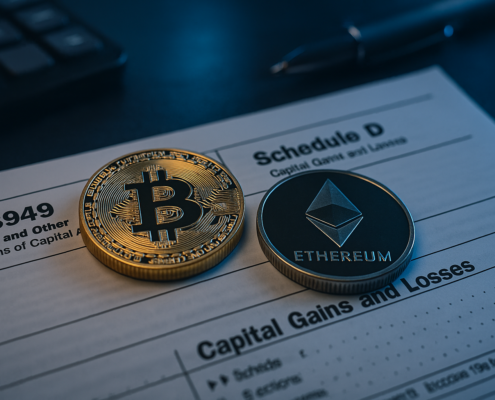 https://minutescrypto.com/wp-content/uploads/2025/11/ChatGPT-Image-Nov-24-2025-11_05_04-AM.png
1024
1536
Minutes Crypto
https://minutescrypto.com/wp-content/uploads/2026/05/logo-1-1030x548.png
Minutes Crypto2025-11-24 09:07:022025-11-26 12:14:13💰 Crypto Losses, Tax Gains: 2025 Edition
https://minutescrypto.com/wp-content/uploads/2025/11/ChatGPT-Image-Nov-24-2025-11_05_04-AM.png
1024
1536
Minutes Crypto
https://minutescrypto.com/wp-content/uploads/2026/05/logo-1-1030x548.png
Minutes Crypto2025-11-24 09:07:022025-11-26 12:14:13💰 Crypto Losses, Tax Gains: 2025 Edition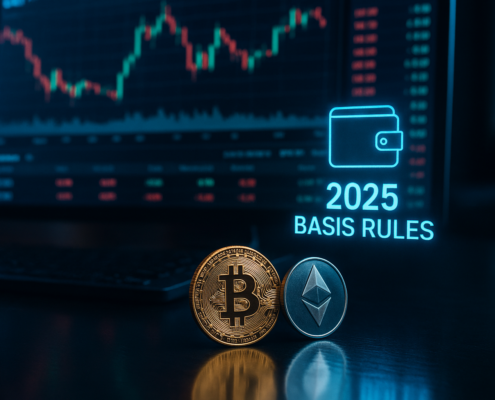 https://minutescrypto.com/wp-content/uploads/2025/11/ChatGPT-Image-Nov-21-2025-at-10_00_09-AM.png
1024
1536
Minutes Crypto
https://minutescrypto.com/wp-content/uploads/2026/05/logo-1-1030x548.png
Minutes Crypto2025-11-21 08:03:082025-11-26 12:17:03Crypto Loss Harvesting & 2025 Basis Rules — A Simple Guide
https://minutescrypto.com/wp-content/uploads/2025/11/ChatGPT-Image-Nov-21-2025-at-10_00_09-AM.png
1024
1536
Minutes Crypto
https://minutescrypto.com/wp-content/uploads/2026/05/logo-1-1030x548.png
Minutes Crypto2025-11-21 08:03:082025-11-26 12:17:03Crypto Loss Harvesting & 2025 Basis Rules — A Simple Guide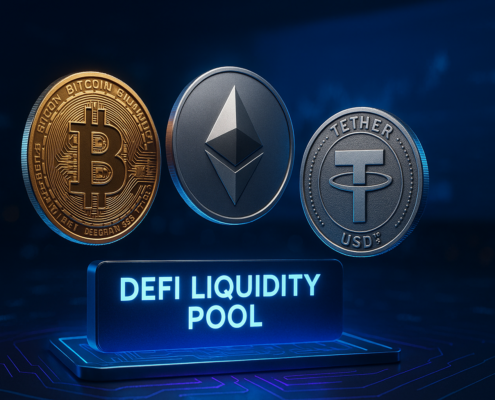 https://minutescrypto.com/wp-content/uploads/2025/11/ChatGPT-Image-Nov-20-2025-at-04_48_22-PM.png
1024
1536
Minutes Crypto
https://minutescrypto.com/wp-content/uploads/2026/05/logo-1-1030x548.png
Minutes Crypto2025-11-20 14:51:372025-11-26 12:17:56DeFi Liquidity Taxes Explained
https://minutescrypto.com/wp-content/uploads/2025/11/ChatGPT-Image-Nov-20-2025-at-04_48_22-PM.png
1024
1536
Minutes Crypto
https://minutescrypto.com/wp-content/uploads/2026/05/logo-1-1030x548.png
Minutes Crypto2025-11-20 14:51:372025-11-26 12:17:56DeFi Liquidity Taxes Explained https://minutescrypto.com/wp-content/uploads/2025/11/ChatGPT-Image-Nov-17-2025-05_15_22-PM.png
1024
1536
Minutes Crypto
https://minutescrypto.com/wp-content/uploads/2026/05/logo-1-1030x548.png
Minutes Crypto2025-11-17 15:17:512025-11-26 12:18:22Navigating Bitcoin Taxes in 2025: Federal, NIIT, and State Rules Simplified
https://minutescrypto.com/wp-content/uploads/2025/11/ChatGPT-Image-Nov-17-2025-05_15_22-PM.png
1024
1536
Minutes Crypto
https://minutescrypto.com/wp-content/uploads/2026/05/logo-1-1030x548.png
Minutes Crypto2025-11-17 15:17:512025-11-26 12:18:22Navigating Bitcoin Taxes in 2025: Federal, NIIT, and State Rules Simplified https://minutescrypto.com/wp-content/uploads/2025/11/ChatGPT-Image-Nov-14-2025-09_45_10-AM.png
1024
1536
Minutes Crypto
https://minutescrypto.com/wp-content/uploads/2026/05/logo-1-1030x548.png
Minutes Crypto2025-11-14 07:53:342025-11-26 12:27:54How to Report Crypto Trading Like a Business
https://minutescrypto.com/wp-content/uploads/2025/11/ChatGPT-Image-Nov-14-2025-09_45_10-AM.png
1024
1536
Minutes Crypto
https://minutescrypto.com/wp-content/uploads/2026/05/logo-1-1030x548.png
Minutes Crypto2025-11-14 07:53:342025-11-26 12:27:54How to Report Crypto Trading Like a Business

Leave a Reply
Want to join the discussion?Feel free to contribute!